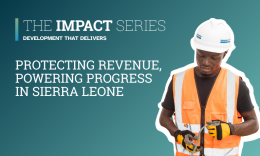
Meet Tani in Sierra Leone
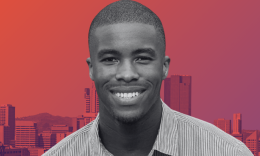
Our “ASI Game Changers” series introduces the people who make our work possible, and allows us to learn about what drives them in their quest to create lasting impact in some of the world’s most challenging, complex environments. In this edition, we speak to our colleague Tani Pratt, Team Leader, Infrastructure Investment Component, Expertise to Support Economic Reform in Sierra Leone (ESER).

- Name: Tani Pratt
- Role: Team Leader, Infrastructure Component, ESER
- Location: Freetown, Sierra Leone
What’s your big “why”? What’s the positive change/impact you and others in your field are trying to achieve and what are some of the challenges you face whilst doing so?
My journey into infrastructure wasn’t planned—it just unfolded over time. I trained as a mining engineer and started working in mining back in 1967. A mine is like a small town, so you end up involved in everything: energy, water, roads, you name it. The mine, where I worked as part of senior management, was attacked during the civil war, and we had no choice but to flee to Freetown. There were five of us with no work, and it didn’t look like mining was coming back anytime soon. So we decided to start our own engineering company, CEMMATS, and this year it will be 30 years old. That’s something I’m very proud of—it has become one of the largest multidisciplinary engineering firms in Sierra Leone.
For me, the real drive has always been proving that Sierra Leoneans can build and run something at the highest standards if we set our minds to it. My work now focuses on tackling huge challenges in the power and water sectors. For example, electricity losses in our country are over 50%. If you generate $100 worth of power, the system only recovers about half. My team’s role is to prepare the ground—so when the private sector eventually steps in, the problems are at least partly under control. It’s not glamorous work, but it’s critical.
If you could write your own job title that best describes what you do here, what would it be?
I’d call myself the Emergency Room Practitioner. My job is to keep the patient alive until the surgeons arrive. We’re making sure the basic systems don’t collapse, so that when bigger investments come in, there’s something to build on.
What do you like about working in a global development company?
Working in development has given me the opportunity to contribute to my country in a meaningful way. I meet everyone—donors, government officials, citizens—and I appreciate that you cannot succeed without getting everyone on board. That level of stakeholder engagement is so important.
Coming from the private sector, I have to admit I sometimes get frustrated by how slow development can be. There are a lot of boxes to tick. But despite the frustrations, you see the impact of your work, and that makes it worthwhile.
What’s the most exciting thing happening in your project/at work right now?
Two things stand out for me. The first is the revenue protection pilot study in the electricity sector. Before we started, everyone warned us that the utility would be extremely difficult to work with and that we’d be met with resistance or endless delays. But I was pleasantly surprised to find good people inside who genuinely wanted to see things improve. That gave me real hope.
The second is our work to bring private investment into the water sector. We’ve been in touch with people in Rwanda who successfully set up a bulk water supply project there, and we’re hoping they’ll come here to share how it worked. Our water system was designed in the 1960s for about 600,000 people—now the population is over 1.5 million. If we don’t act, we’ll face a disaster in just a few years. So getting that moving feels exciting and urgent.
What movements or discussions inspire you generally right now?
What drives me is the idea that Sierra Leone can do better. We have every resource—minerals, sunshine, rainfall—and there’s no reason we should be at the bottom of the Human Development Index. But we need to develop a sense of nationhood instead of splitting into tribes. We must also root out endemic corruption.
I’m nearing the tail end of my professional life, so I’m glad to see the company we started thriving. Ethnic divisions never played a part in our team—professionalism was what mattered. I think that spirit is what the country needs on a larger scale. Outside of engineering, music is my great passion. I only recently retired as the organist at St George’s Cathedral. Teaching young organists has brought me so much joy—especially seeing two of my students earn distinctions in their Grade 8 exams, the highest level.
What volunteering or passion projects do you do outside of work?
Aside from music, I’ve spent years volunteering in the engineering profession. When I came back to Freetown, I got involved with the Sierra Leone Institution of Engineers and eventually served as President. Later, I chaired the regulatory body, and it took us over a decade to update the old act governing the sector. That was all voluntary, but I’m proud to think it made a real difference—giving us a much stronger framework to regulate engineering properly and raise professional standards across the country.
What’s a quality a game changer should have and what’s your ambition to be one?
You need to be inquisitive, prepared to work hard, and remain humble. You have to learn from others. And when you do make change happen, do it with humility. I don’t believe we need to wait for some single heroic figure to fix things—a Moses coming out of the Red Sea. Each of us has to do our bit. If everyone makes their own contribution, all those efforts together will eventually transform Sierra Leone.